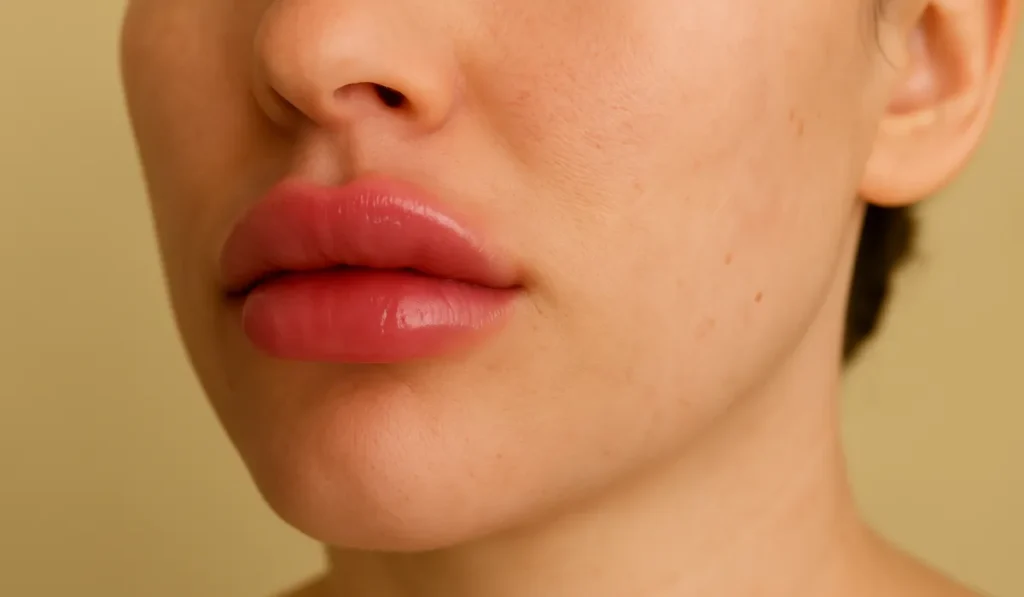
What are overfilled lips?
Overfilled lips refer to lips that appear unnaturally large, firm, or misshapen due to excess cosmetic volume. This may occur when too much product is used or when product shifts outside the natural lip border. While lip enhancement can create beautiful results, overfilling can distort proportions and affect natural expression.
In Australia, awareness is growing around overfilled lips. Many people are now seeking help to reverse or refine previous treatments for a more balanced look.
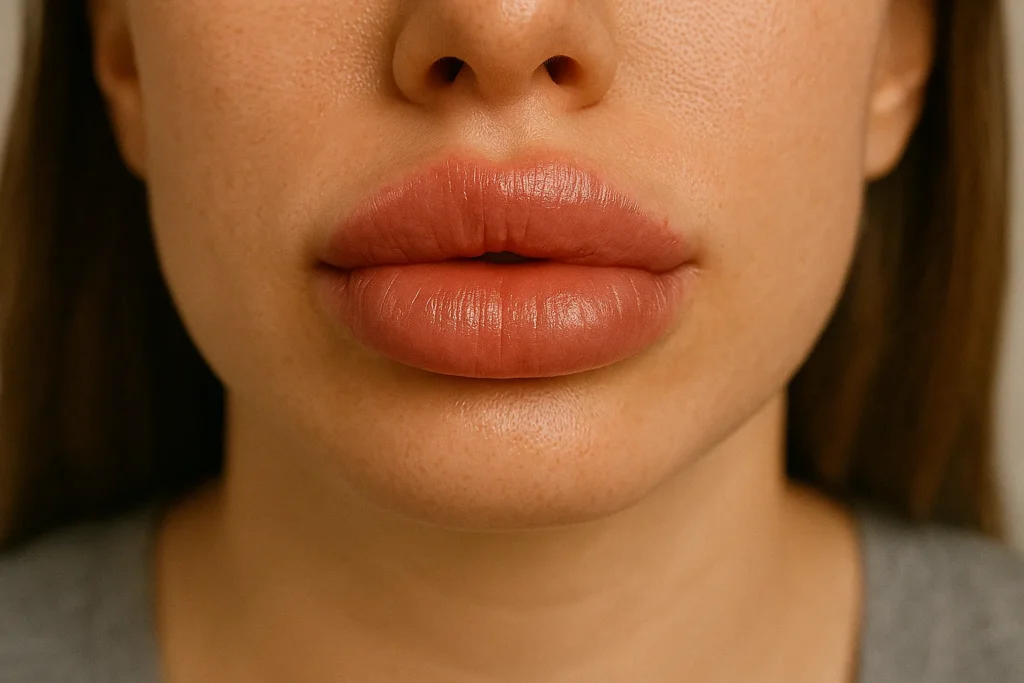
What causes overfilled lips?
Cause #1 – Too much product
Layering too much volume in a short time, or topping up without allowing previous product to settle, can create bulk or firmness.
Cause #2 – Placement
Product placed outside the natural lip border may cause a puffy or distorted look. Even with correct technique, natural lip anatomy may not tolerate certain volumes, leading to gradual product migration. In some cases, a person’s natural anatomy simply can’t hold a certain volume, and the product is gradually pushed into surrounding areas.
Cause #3 – Infrequent dissolving or maintenance
Lips that are repeatedly topped up without reassessing shape and structure may start to look unnatural or unbalanced over time.
Cause #4 – Trend-driven requests
Social media trends or filtered imagery may influence requests for exaggerated lips that don’t suit individual features.
Why do some lips look overfilled and others don’t?
Factor #1 – Facial proportions
Even small amounts of product can look overdone if the lips become out of proportion with the rest of the face.
Factor #2 – Lip anatomy
Some lips have a naturally smaller surface area or thinner tissue, which may not tolerate large volumes of product well.
Factor #3 – Repeated treatments without reassessment
Product that hasn’t fully broken down may layer over time, creating fullness and rigidity.
Factor #4 – Migration
Product that moves into the upper lip, philtrum, or beyond the border may lead to a “shelf” effect or visual heaviness.
The impact of overfilled lips
Overfilled lips can affect both appearance and confidence. Common concerns include:
- Loss of natural expression – The lips may appear stiff or restricted.
- Unbalanced facial proportions – Lips may overpower other features or draw unwanted attention.
- Puffiness or distortion – Migration above the lip border can cause the area to look swollen or heavy.
- Difficulty speaking or smiling – In severe cases, excessive product can impact movement.
- Regret or self-consciousness – Some people feel they no longer recognise themselves or avoid photos and social events.
Frequently Asked Questions
Can overfilled lips be reversed?
Professional treatments may help reduce unwanted product and restore a more natural appearance. These procedures must be performed by a qualified Australian doctor or nurse, who can also advise on whether further treatment is appropriate.
How long does it take to fix overfilled lips?
The timeframe depends on the type of procedure performed and how your lips respond. Some people may notice change within a few days, while others may need several weeks for swelling and tissue recovery to settle before any further treatment is considered.
Will lip dissolving make my lips look deflated or saggy?
After product reduction, lips may appear smaller or less full, particularly if you’ve become used to the previous volume. This is usually a return to your natural anatomy rather than a side effect of the procedure. Natural changes in lip volume also occur with age, which may contribute to this appearance.
Are lip dissolving treatments safe?
All medical procedures carry some level of risk. Dissolving treatments should only be performed by a qualified Australian healthcare professional who can assess suitability and explain potential risks during a consultation.
Are lip dissolving treatments covered by Medicare?
Cosmetic procedures are not generally covered by Medicare in Australia. In some rare cases where there is trauma or a medical reason for treatment, partial coverage may apply, but this must be assessed by a doctor.