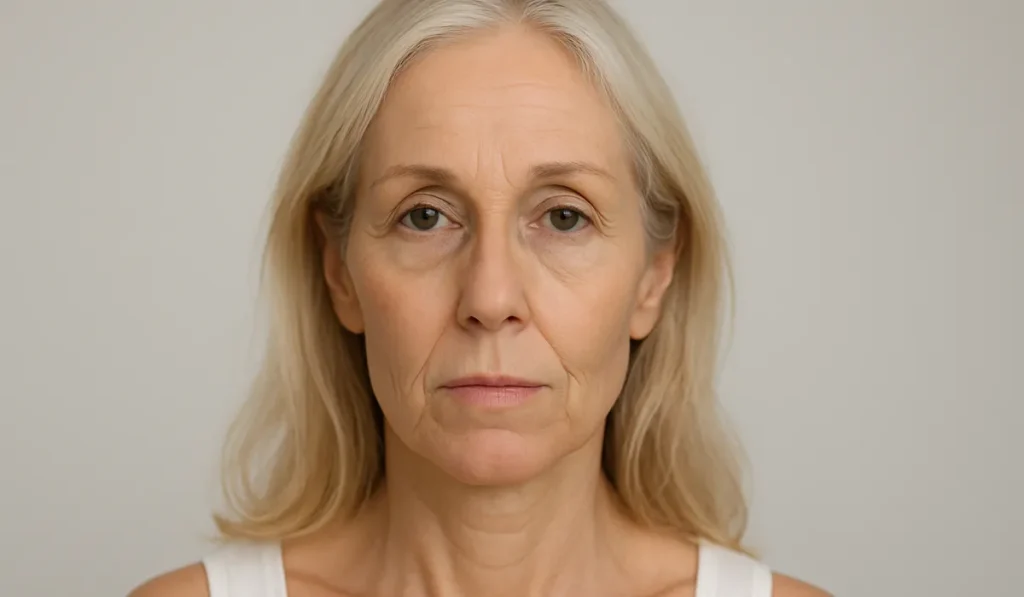
What are sunken cheeks?
Sunken cheeks refer to a hollow or flattened appearance in the mid-face, usually just under the cheekbones. This can cause shadowing, loss of definition, and a drawn or aged look, even in healthy individuals.
Many Australians seek ways to restore cheek volume and support the mid-face using natural-looking, medically guided approaches. Understanding the cause of mid-face volume loss is the first step in choosing a suitable treatment path.

What causes sunken cheeks?
Cause #1 – Age-related volume loss
As we age, the face naturally loses fat, collagen, and bone density. These elements provide structure to the mid-face. When they diminish, the cheeks may appear hollow, sunken, or less defined.
Cause #2 – Fat pad descent
Facial fat pads not only shrink with age but also shift downward. This contributes to volume loss in the upper cheeks and may increase heaviness in the lower face, changing the overall shape and balance.
Cause #3 – Genetics
Some people naturally have a leaner facial structure or less fullness in the cheeks. This is not a medical concern but may be addressed for aesthetic reasons.
Cause #4 – Significant weight loss
Rapid or substantial weight loss can result in reduced fat volume in the face. This is especially noticeable in individuals with already slim bone structure.
Cause #5 – Illness or lifestyle
Poor nutrition, chronic illness, smoking, or prolonged stress can contribute to collagen breakdown, loss of fat stores, and a drawn facial appearance.
Why do I have sunken cheesks and others don’t?
Several factors influence whether cheek hollowing appears and how early it becomes noticeable:
Factor #1 – Facial structure
People with high cheekbones and narrow faces often show volume changes more prominently.
Factor #2 – Skin type
Thinner or lighter skin may reveal underlying changes more easily than thicker or more resilient skin.
Factor #3 – Genetics
Family traits and inherited ageing patterns can affect how quickly the mid-face loses volume.
Factor #4 – Lifestyle
Smoking, dehydration, poor nutrition, and sun exposure can accelerate visible signs of volume loss.
Do sunken cheeks always need treatment?
No. For many, sunken cheeks are simply part of their natural facial shape or ageing process. Treatment is considered when the individual:
- Feels they look tired, gaunt, or aged
- Notices a loss of definition or contour in the mid-face
- Wants to lift or disguise sagging lower-face features caused by replacing volume where it is depleted
The focus is often on subtle restoration, not dramatic change.
Frequently Asked Questions
Q: What is the best treatment for sunken cheeks in Australia?
A: There is no single best option, as the right approach depends on your facial structure and the underlying cause of volume loss. Some people may benefit from professional treatments that help support mid-face volume, while others may consider surgical procedures performed by qualified specialists. A consultation with a qualified Australian healthcare practitioner can help determine what may be most appropriate for you.
Q: Can I fix hollow cheeks without surgery?
A: Some professional approaches may help support the mid-face area without surgery. These can include treatments that encourage collagen production or support skin firmness. Results vary between individuals and may develop gradually over time. It’s best to discuss your goals with a qualified Australian healthcare practitioner to understand what may be suitable for you.
Q: Are treatments for sunken cheeks safe?
A: All medical procedures carry risks. It’s important to speak with a qualified Australian healthcare practitioner before proceeding. They can help determine which treatment is appropriate based on your individual anatomy and goals.
Q: Will I look “overfilled” or unnatural?
A: A skilled provider will aim for facial balance, restoring volume in proportion to your natural features. The goal is always to look refreshed, not overdone.
Q: Are any treatments covered by Medicare in Australia?
A: Treatments for sunken cheeks are considered cosmetic and are not typically covered by Medicare.