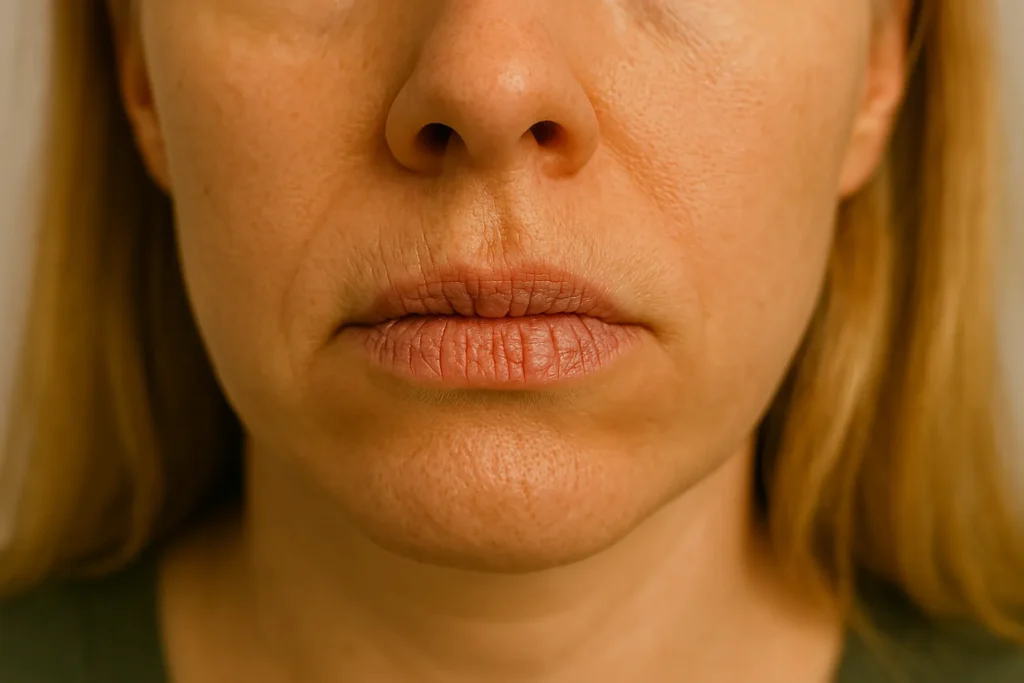
What are dehydrated lips?
Dehydrated lips feel dry, tight, or flaky. They may look cracked or dull. Many people notice this concern during seasonal changes or after time in sun, wind, or dry indoor air.
Dryness can make the lips feel uncomfortable. It can also affect how lip products sit on the skin. Understanding why dehydrated lips occur helps you choose the right daily care and know when to seek advice from a qualified professional.
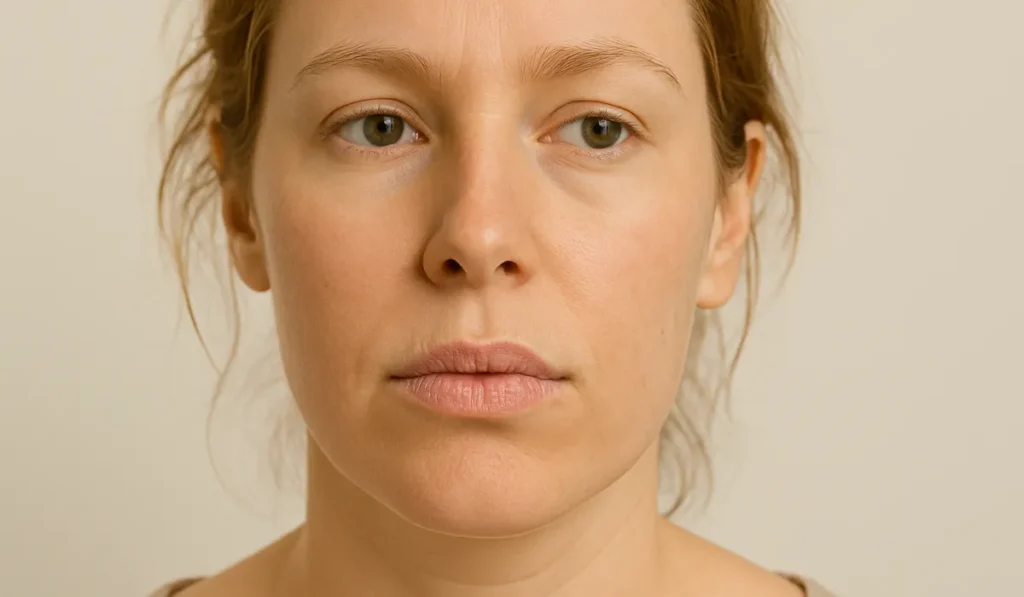
What causes dehydrated lips?
Cause #1 – Environmental exposure
Sun, wind, and dry air can make dehydrated lips more noticeable. Heating and cooling systems reduce humidity. This can increase day to day dryness.
Cause #2 – Inadequate water intake
Low fluid intake can influence the way the lips feel. When the body is not well hydrated, the lips can show early signs of dryness.
Cause #3 – Lip licking or biting
These habits remove surface moisture and may lead to repeated irritation.
Cause #4 – Harsh products
Fragrances, menthol, camphor, and strong exfoliants can irritate sensitive skin on the lips. This may increase dryness over time.
Cause #5 – Ageing
As people get older, natural moisture levels change. Lips can look and feel drier due to shifts in elasticity and skin thickness.
Cause #6 – Medication
Some medications list dry lips as a recognised side effect. A GP or pharmacist can advise whether this applies to your situation.
Cause #7 – Angular cheilitis
This condition affects the corners of the mouth. It can cause cracking or redness that may be confused with dehydration. A medical review can help confirm the cause.
Cause #8 – Skin conditions such as eczema or dermatitis
Inflammatory skin concerns can appear around the lip area. These may lead to flaking or irritation. A GP or dermatologist can assess these symptoms.
Why do I have dehydrated lips and others don’t?
Factor #1 – Individual skin type
Everyone has a different skin barrier. Some people naturally have lips that lose moisture faster.
Factor #2 – Lifestyle and hydration
Fluid intake, caffeine, alcohol, and overall diet influence how the skin feels. These habits may affect dehydrated lips.
Factor #3 – Environment and habits
Sun exposure, time outdoors, indoor climate, and the products used on the lips all contribute to dryness.
Factor #4 – Age and collagen changes
Moisture levels change with age. This can make dehydrated lips more common.
Factor #5 – Medications
Some medications can influence skin hydration. This may increase lip dryness in certain people.
Factor #6 – Underlying conditions such as angular cheilitis or eczema
Conditions that affect the lips can appear at the same time as dehydration. Ongoing symptoms should be reviewed by a healthcare professional.
The impact of dehydrated lips
Dehydrated lips can affect comfort, confidence, and how lip products wear. Common concerns include:
- Cracking or peeling – Lips may split easily, especially at the corners.
- Rough or uneven texture – Lipstick or gloss may settle into fine lines or flake off.
- Tight or uncomfortable feeling – Lips can feel sore or irritated, particularly in dry climates.
- Dull appearance – Dehydrated lips often appear flat or lack colour.
- Highlighting of other concerns – Dry lips can make lines or volume loss more noticeable.
Frequently Asked Questions
What can help support comfort for dehydrated lips?
Gentle daily care, sun protection, and consistent hydration can support the lips. A qualified healthcare professional can offer guidance tailored to your needs.
Do dehydrated lips mean I need more lip volume?
No. Dehydrated lips often relate to moisture, not volume. Supportive care can help the area feel more comfortable.
Can dehydrated lips be linked to other conditions?
Yes. Ongoing dryness sometimes relates to skin conditions, irritation, or nutritional factors. A GP or dermatologist can check this.
How do I prevent my lips from drying out again?
Daily SPF lip balm, balanced hydration, gentle products, and avoiding lip licking can help reduce dryness.
Are dehydrated lip concerns covered by Medicare?
Medicare does not cover cosmetic concerns. Medical reviews for conditions like eczema or nutritional issues may be covered depending on the circumstances.